
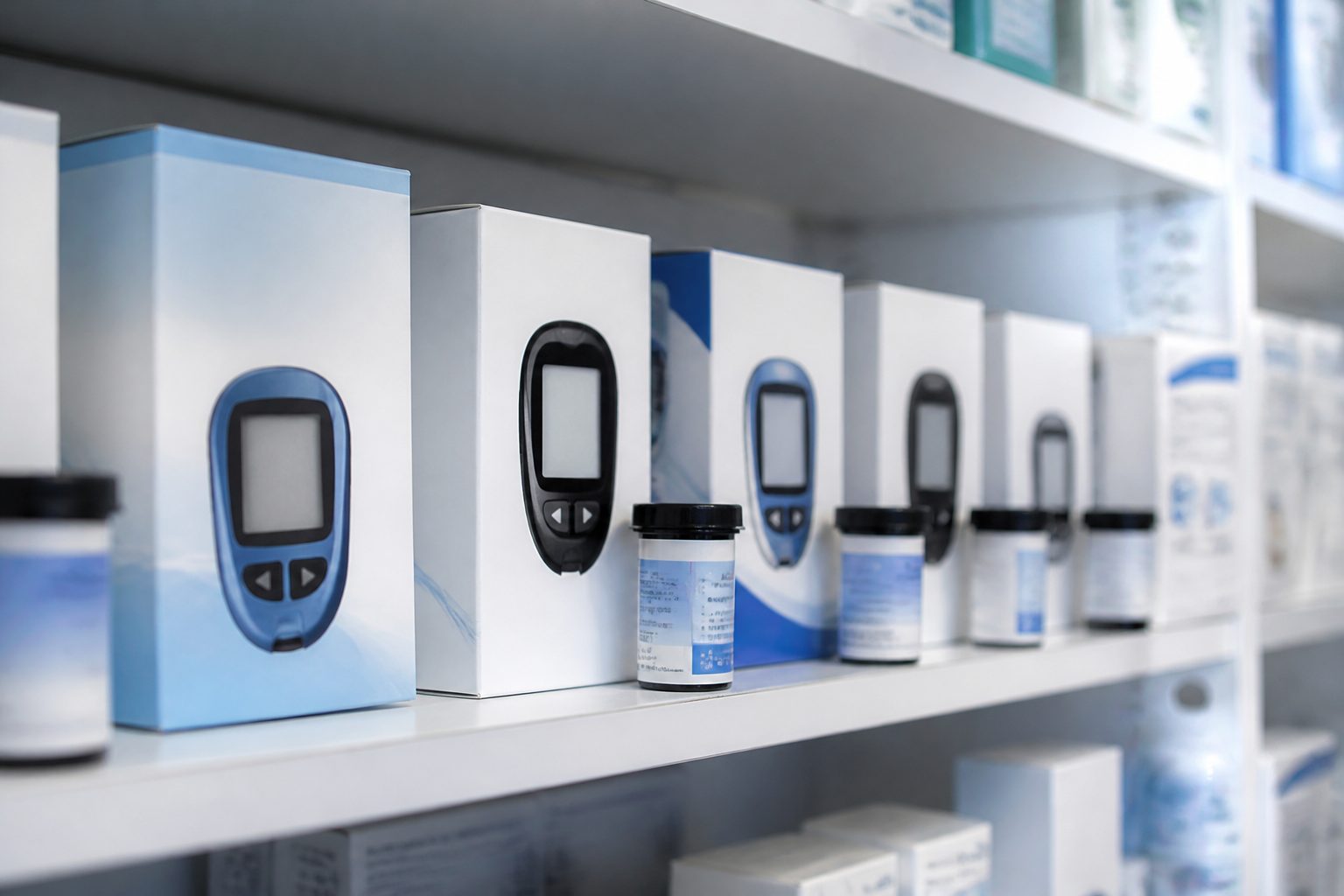
This guide is for people comparing glucometer brands and prices, whether for personal use or to help a family member manage diabetes. Most leading glucometers cost between $10 and $50 (₹800–₹4,100; ₱570–₱2,850), but long-term costs depend on test strip prices and availability.
Below, we compare the top 10 glucometer brands worldwide, focusing on price, features, and practical points for international buyers. The table at the end summarises all brands, with tips on choosing the right model and controlling ongoing costs.
How we chose these
We selected these glucometer brands based on their reputation for accuracy, volume of use worldwide, presence in major pharmacy chains and online stores, range of models, and cost transparency. Brands with reliable international warranties, strong customer support, and a track record of servicing international patients were prioritised. Where possible, we considered regulatory approvals and, for some brands, evidence of quality certifications.
1. Accu-Chek (Roche), Basel
Accu-Chek is one of the most recognised glucometer brands worldwide, known for its reliability and the wide availability of both meters and test strips. The brand offers a range of models, from basic to advanced, with features like Bluetooth connectivity and memory storage. Many hospitals and clinics use Accu-Chek meters for point-of-care testing, and strips are stocked in most major pharmacies. International patients appreciate the global customer support and the ease of finding replacement strips in different countries.
Indicative cost: $20-$50
2. OneTouch (LifeScan), Malvern
OneTouch meters are popular for their user-friendly design, clear displays, and straightforward test procedure. The brand is widely available in North America, Europe, and Asia, with a good range of compatible strips. OneTouch is often recommended for people new to self-testing due to its simple operation and reliable accuracy. International buyers can find both meters and strips in pharmacy chains and online stores, and the company provides multi-language support materials.
Indicative cost: $15-$40
3. Contour (Ascensia Diabetes Care), Basel
Contour meters are highly regarded for their accuracy and ease of use. The range includes basic models as well as smart meters with Bluetooth and data-tracking features. Test strips are available in most regions, but prices can vary. Contour is frequently chosen by people who need reliable readings with minimal fuss, and the company offers responsive customer support. International travellers report good availability of strips in major cities.
Indicative cost: $15-$40
4. FreeStyle (Abbott), Chicago
FreeStyle meters from Abbott are known for being compact and offering advanced features such as alternative site testing and optional data connectivity. The brand is especially popular among tech-savvy users who want to sync readings to their phone. FreeStyle test strips are widely distributed but can be more expensive than some competitors, especially in lower-income countries. Abbott provides clear instructions and support for international users.
Indicative cost: $20-$45
5. TRUE Metrix (Trividia Health), Fort Lauderdale
TRUE Metrix meters are a budget-friendly option found in many US pharmacies, often as store-branded devices. They offer basic functionality with reliable accuracy for most users. The brand’s test strips are among the more affordable on the market, making it a practical choice for those who test frequently or are concerned about ongoing costs. International availability is improving, but strips may be harder to find outside North America.
Indicative cost: $10-$25
6. CareSens (i-SENS), Seoul
CareSens glucometers are popular in Asia and growing in other regions due to their competitive pricing and reliability. The meters are straightforward to use, with clear displays and simple test procedures. CareSens strips are generally affordable and available in many Asian pharmacy chains. The brand is gaining traction among cost-conscious buyers who still want reliable performance. International support is available in multiple languages.
Indicative cost: $10-$25
7. Prodigy, Charlotte
Prodigy specializes in voice-guided glucometers, designed to help visually impaired users perform tests independently. The meters provide audible step-by-step instructions and results. Prodigy is widely used in the US and is available through specialist medical suppliers and online stores. For international buyers, availability may be more limited, but the brand is well regarded for its accessibility features.
Indicative cost: $15-$35
8. Dr. Morepen, New Delhi
Dr. Morepen is a leading budget glucometer brand in India and neighboring countries. The meters are simple, reliable, and among the most affordable on the market. Test strips are inexpensive and widely available in South Asia. Dr. Morepen is a practical option for people in India, Bangladesh, and Pakistan looking for a cost-effective solution for regular blood glucose monitoring. International buyers may find strips harder to source outside the region.
Indicative cost: $10-$20
9. Omron, Kyoto
Omron, better known for blood pressure monitors, also offers accurate and user-friendly glucometers. The brand’s meters are popular in Asia, Europe, and increasingly in Africa and the Middle East. Omron devices are valued for their robust construction and clear instructions. Test strips can be more expensive than local brands but are generally available in major pharmacy chains. Omron’s global customer service is a plus for international buyers.
Indicative cost: $20-$40
10. Beurer, Ulm
Beurer is a German manufacturer known for high-quality health devices, including reliable glucometers. Their meters are easy to use, with a reputation for durability and accurate readings. Beurer products are widely available in Europe and growing in Asian markets. The price point is mid-range, and strips are priced similarly to other European brands. Beurer offers multi-language support and clear documentation, making it suitable for international users.
Indicative cost: $20-$40
| Rank | Hospital | City | Known for | Indicative cost |
|---|---|---|---|---|
| 1 | Accu-Chek (Roche) | Basel | Reliable, widely available glucometers and strips | $20-$50 |
| 2 | OneTouch (LifeScan) | Malvern | Popular, user-friendly meters and strips | $15-$40 |
| 3 | Contour (Ascensia Diabetes Care) | Basel | Highly accurate, easy-to-use meters | $15-$40 |
| 4 | FreeStyle (Abbott) | Chicago | Compact meters, advanced features | $20-$45 |
| 5 | TRUE Metrix (Trividia Health) | Fort Lauderdale | Affordable, widely available meters | $10-$25 |
| 6 | CareSens (i-SENS) | Seoul | Affordable, reliable meters | $10-$25 |
| 7 | Prodigy | Charlotte | Voice-guided meters for visually impaired | $15-$35 |
| 8 | Dr. Morepen | New Delhi | Budget-friendly meters, popular in Asia | $10-$20 |
| 9 | Omron | Kyoto | Accurate, easy-to-use meters | $20-$40 |
| 10 | Beurer | Ulm | German-made, reliable glucometers | $20-$40 |
What drives glucometer prices
Several factors contribute to the price you pay for a glucometer, both at the time of purchase and over the device’s lifetime. The meter’s features play a major role: advanced models with memory storage for hundreds of readings, Bluetooth or USB connectivity, and alternate site testing (such as palm or forearm) typically cost more than basic models. Brand reputation and reliability also influence price, with established names often charging a premium for perceived quality and robust customer support.
Regulatory approvals, such as FDA clearance in the United States or CE certification in Europe, can add to manufacturing costs, which are then reflected in the retail price. In countries with strict medical device regulations, only certain brands may be available, sometimes leading to higher prices due to limited competition.
However, the ongoing expense of test strips is often the most significant cost for users. Strips for popular brands are widely available and may benefit from competitive pricing, especially in large markets like the US, Germany, or India. Conversely, less common brands may have higher strip prices or limited distribution, making it harder and more expensive to maintain regular testing.
Other local factors can also drive up prices. Import duties, pharmacy markups, and value-added taxes (VAT) are common outside the US and Europe, particularly in countries like Brazil, South Africa, or Indonesia. In some regions, lack of insurance coverage or government subsidies means patients pay the full retail price. Understanding these factors can help you budget for both the initial purchase and ongoing use of your glucometer.
How to choose the right glucometer
Selecting the best glucometer for your needs involves weighing several practical and financial factors. Start by considering how frequently you test your blood sugar—if you check multiple times a day, prioritize a meter with affordable, widely available test strips. For those with visual impairments, look for models with large displays, backlighting, or audio features. If you have limited dexterity, choose a device with easy-to-handle strips and buttons.
For users interested in tracking their glucose trends over time, some meters offer Bluetooth or USB connectivity, allowing you to sync results with a smartphone app or computer. This is especially helpful for sharing data with healthcare providers. If you travel frequently or split your time between countries, opt for a brand with a global presence and readily available strips in your destinations. Simpler, no-frills models are often best for those who prefer minimal technology and straightforward operation, such as seniors or those new to blood glucose monitoring.
Before making a purchase, research the ongoing cost and availability of test strips in your country, as this will have the biggest impact on your long-term expenses. Check online reviews and ask local pharmacies about stock levels for your preferred brand. Reliable customer support is also important—look for brands with accessible helplines, service centers, or online resources in your language. If you have health insurance, find out if certain brands or models are covered to help manage costs. Taking these steps will help you choose a glucometer that fits your lifestyle and budget.
What is and isn’t included in the price
When you buy a glucometer, it’s important to understand exactly what comes in the box and what you’ll need to purchase separately over time. Typically, the initial retail price covers the glucometer device itself, a lancing device for drawing blood, a small supply of lancets (usually 5–10), and a starter pack of test strips—often between 10 and 25. Some brands also include a carrying case and batteries, but this varies, so always check the packaging details before purchasing.
However, the initial kit is just the beginning. Replacement test strips and lancets are ongoing expenses, and the cost can add up quickly depending on how often you need to test. While batteries are usually included with the device, you should confirm whether future replacements are easy to find locally, as some meters use less common battery types. The warranty period also differs by brand, with most offering at least one year of coverage, but some premium brands may provide longer warranties or extended customer support if you register your device online.
Be aware that bundled deals—such as meters sold with extra test strips or promotional offers—are common online and in some pharmacies. These can offer better value, but always compare prices for strips and lancets separately to ensure you’re getting a good deal. Some health insurance plans or government programs may cover part of the cost for the meter or strips, but coverage varies widely by country and insurer. Finally, accessories like smartphone connectivity cables, control solution, or advanced data management tools are usually sold separately.
Hidden costs and how to save safely
While the upfront price of a glucometer may seem reasonable, the real expense lies in the ongoing purchase of test strips, which can range from $0.15 to $1 per strip depending on the brand, model, and country. For people who test several times a day, these costs can quickly outpace the price of the meter itself. Additional hidden expenses may include replacement lancets, control solutions for calibration, batteries, and accessories such as carrying cases or data cables.
To save money, consider buying test strips in bulk from reputable pharmacies or authorized online retailers, as larger packs often offer a lower per-strip cost. Many pharmacies have loyalty or rewards programs that provide discounts or cashback on health products, including glucometer supplies. Some manufacturers and online platforms also offer bundled deals with extra strips or periodic promotions—just make sure these are from trusted sources.
However, be cautious when shopping online, especially on marketplace sites where counterfeit or expired test strips are sometimes sold at deep discounts. Using such strips can result in inaccurate readings and put your health at risk. Always check the expiry date and packaging for signs of tampering, and buy only from authorized sellers or established local pharmacies.
In many countries, government health programs or private insurance plans may cover part or all of the cost of meters and strips for eligible patients, such as those with diabetes. Check your eligibility and the list of approved brands. By combining bulk buying, loyalty programs, and insurance benefits—and by avoiding risky gray-market products—you can manage your glucometer costs safely and effectively.
Tips for international buyers
When purchasing a glucometer from another country or through international online retailers, there are several important factors to consider to ensure you get a device that works well for your needs and avoids unexpected costs. First, verify that both the glucometer and its test strips comply with your local voltage (for rechargeable models) and meet your country’s regulatory standards, such as FDA approval in the US, CE marking in Europe, or TGA approval in Australia. This is especially important if you plan to import the device yourself, as customs officials may seize or reject non-compliant medical devices.
Shipping fees and customs duties can significantly increase the total price, particularly in countries with high import taxes or strict medical device regulations. Factor in delivery times, which can range from a few days to several weeks, depending on the shipping method and customs processing. Some countries, like Canada and India, have additional import restrictions or require special documentation for medical devices.
Look for glucometer brands that offer international service centers or customer support in your language. Multi-language instruction manuals are helpful if English is not your first language. If you frequently travel or live in more than one country, select a brand with global distribution of test strips—this is crucial, as some brands are only available in certain regions. Stock up on test strips before you move or travel, or confirm that you can purchase them easily at your destination. Finally, check if your warranty is valid internationally, as some brands only honor warranties in the country of purchase.
Frequently asked questions
How often do glucometer strips need to be replaced?
Test strips are single-use and must be replaced for each blood glucose test. How many you need depends on how often you test—most people use 1–4 strips per day. Always check the expiry date, as expired strips may give inaccurate results.
Are cheaper glucometers less accurate?
Most glucometers sold by major brands meet international accuracy standards. Cheaper meters can be reliable, but accuracy may vary more between batches. If accuracy is critical, choose a brand with a strong reputation and local customer support.
Can I use strips from one brand with another brand’s meter?
No, test strips are generally not interchangeable between brands or even between different models from the same brand. Always use the strips specified for your meter to ensure accuracy and safety.
Is a prescription required to buy a glucometer?
In most countries, glucometers and strips are available over the counter at pharmacies and online. Some insurance or government programs may require a prescription for reimbursement, but you do not usually need one to purchase the device.
What maintenance does a glucometer require?
Glucometers need to be kept clean and dry, with batteries replaced as needed. Some models require periodic calibration with control solutions. Follow the manufacturer’s instructions and store the meter and strips away from heat and humidity.
Related guides
Disclaimer: Prices quoted are indicative and can vary by location, retailer, and model. Always consult a qualified healthcare professional and obtain a written quote from your pharmacy or supplier before purchase.