
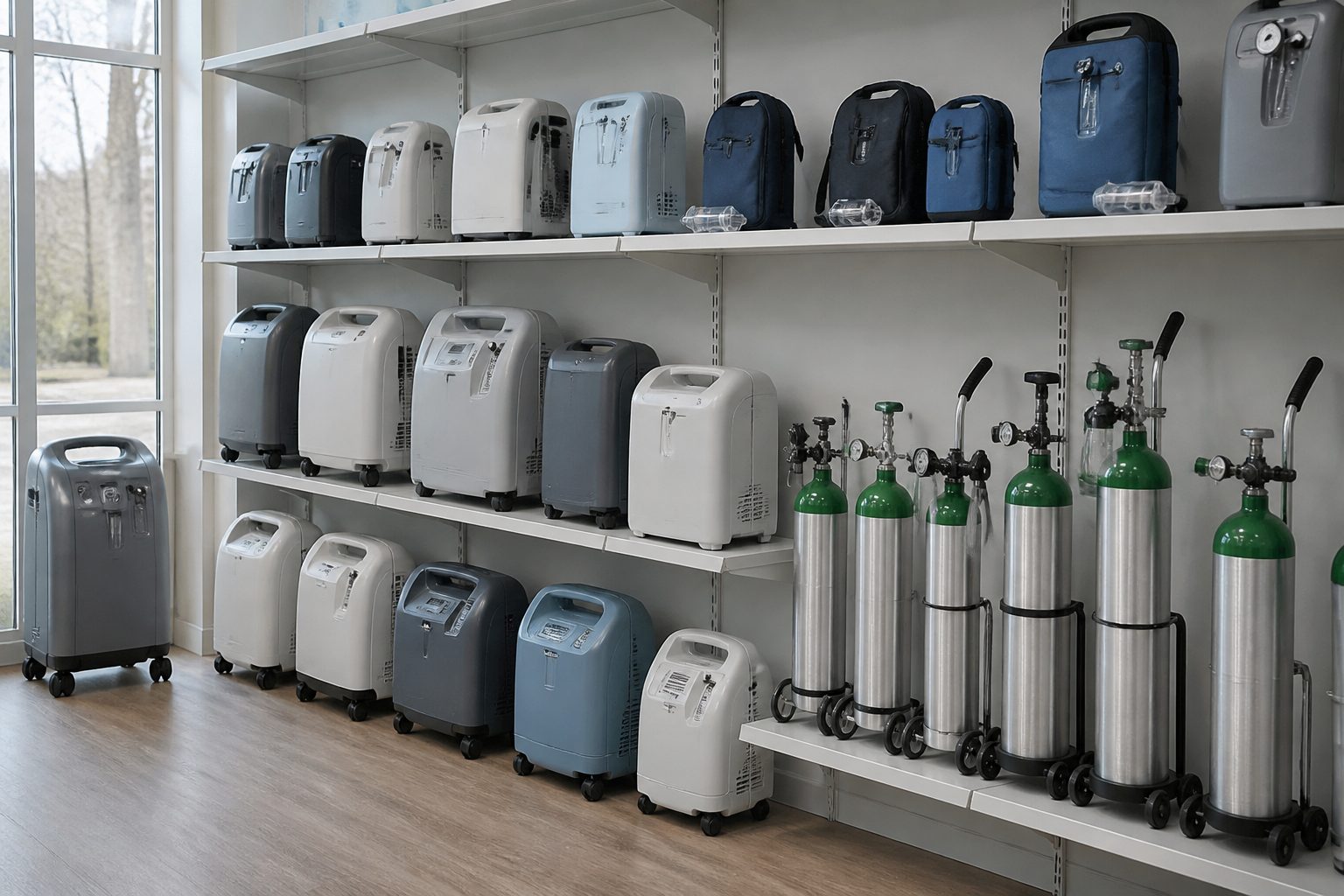
Patients in the USA who need home oxygen therapy face significant costs, especially when choosing between branded and generic devices. For most, the out-of-pocket price for a home oxygen concentrator ranges from $250 to $2,500, while monthly rental or refill costs add $150 to $400. Choosing a generic unit can reduce expenses, but it’s important to compare features, warranties, and insurance coverage.
This guide details costs for branded versus generic home oxygen equipment in the USA, what’s included, what hidden costs to expect, and how to save safely. We also compare prices with other major countries and discuss practical considerations for patients and families.
What is home oxygen therapy and who needs it?
Home oxygen therapy is a medical treatment prescribed for individuals whose blood oxygen levels are consistently below normal, making it difficult for their bodies to function efficiently. This therapy is most commonly used for chronic respiratory conditions that impair the lungs’ ability to absorb oxygen from the air. In the United States, the most frequent reasons for home oxygen therapy include chronic obstructive pulmonary disease (COPD), pulmonary fibrosis, severe asthma, cystic fibrosis, and advanced heart failure. Less commonly, patients with certain neuromuscular diseases or congenital heart defects may also require supplemental oxygen at home.
Doctors determine the need for home oxygen therapy through clinical evaluation, blood tests such as arterial blood gases, or non-invasive pulse oximetry. The prescription will specify the oxygen flow rate (measured in liters per minute) and the number of hours per day the patient needs to use the therapy. Some patients require continuous oxygen, while others may only need it during sleep or physical activity.
There are three main delivery methods for home oxygen therapy:
- Stationary oxygen concentrators: These devices plug into a wall outlet and extract oxygen from room air, delivering it through tubing and nasal cannulas. They are best suited for use at home, especially for patients who are less mobile.
- Portable oxygen concentrators: Battery-powered and lightweight, these allow patients to leave home and remain active. They are ideal for travel, running errands, or attending social events.
- Compressed oxygen cylinders: These metal tanks store oxygen under pressure and can be used as a primary or backup source. They are often used in combination with concentrators for emergencies or outings.
Doctors and respiratory therapists work with patients to determine the best combination of equipment based on their medical needs, lifestyle, and level of mobility. In the USA, a prescription is required to obtain home oxygen equipment, and insurance or Medicare coverage may depend on documented medical necessity. Understanding your diagnosis and prescribed therapy is the first step to managing your health and navigating the associated costs.
Branded vs generic home oxygen: What’s the difference?
When comparing home oxygen equipment, one of the most important decisions is whether to choose a branded or generic device. Branded devices are manufactured by established, well-known companies such as Philips Respironics, Invacare, ResMed, and Inogen. These companies invest heavily in research and development, resulting in products with advanced features like precise oxygen delivery, quieter operation, longer battery life for portable units, and enhanced alarm systems for safety. Branded devices typically come with longer warranties—often 3 to 5 years—and have extensive service networks across the USA, ensuring that repairs and replacement parts are readily available. Many branded models are also cleared by the FDA, which can be a key requirement for insurance or Medicare reimbursement.
Generic or unbranded home oxygen concentrators are usually produced by lesser-known manufacturers, sometimes overseas. These devices are often significantly less expensive upfront, making them attractive to patients paying out-of-pocket or those who do not qualify for insurance coverage. While many generic models can deliver similar oxygen purity and flow rates as branded devices, there are important differences to consider. Warranty periods are usually shorter—sometimes only one year—and finding local servicing or replacement parts can be challenging. In addition, some generic devices may not be FDA-cleared, which can affect your ability to get insurance reimbursement or support from your healthcare provider.
Another factor to consider is the availability of consumables and accessories. Branded devices often use proprietary filters, batteries, and tubing, which can be more expensive but are reliably available. Generic devices may use standard components, which can be cheaper but sometimes harder to source or less reliable in quality. Also, branded companies usually offer better customer support, training, and troubleshooting—valuable if you encounter issues or need help with setup.
Ultimately, the choice between branded and generic home oxygen equipment depends on your budget, insurance status, and comfort with potential trade-offs in warranty, support, and long-term reliability. Always check for FDA clearance, read customer reviews, and ask your supplier about after-sales service before making a decision.
Home oxygen device costs in the USA
The price of home oxygen equipment in the United States can vary widely depending on several key factors: whether you buy or rent, the type of device you need, and whether you choose a branded or generic model. Costs also differ based on where you live, your insurance status, and the specific features or accessories required for your medical needs. Understanding these differences helps you make a more informed decision and avoid overspending.
- Stationary concentrators (branded): These plug-in units, made by leading manufacturers like Philips Respironics or Invacare, typically cost between $800 and $2,500 to buy outright. They offer higher reliability, advanced features, and longer warranties, which can be important for long-term users.
- Stationary concentrators (generic): Generic versions, often imported and with fewer advanced features, are much more affordable, ranging from $250 to $900. However, buyers should check for FDA clearance and warranty terms, as service support may be limited.
- Portable concentrators (branded): These lightweight, battery-powered devices are designed for mobility and can cost $2,000 to $3,500. Branded models usually offer longer battery life, quieter operation, and better customer support, which can be crucial for active lifestyles.
- Portable concentrators (generic): Generic portable units are available for $700 to $1,600. While they may offer similar oxygen output, battery life and durability can vary, and after-sales support is often less robust.
- Oxygen cylinders: These traditional tanks cost $100 to $300 each for purchase. Most patients rent them, with refill or rental fees of $15 to $30 per week, which may include delivery and pickup. Cylinder users also need to budget for regulators and carts.
In the USA, rental is a common option, especially when insurance or Medicare is involved. Monthly rental fees for concentrators or cylinders generally range from $150 to $400. These fees usually include basic maintenance, periodic checks, and sometimes replacement parts or consumables. However, the specifics can vary by supplier and region, so it’s important to clarify what your monthly payment covers.
Other factors influencing cost include prescription requirements, shipping fees (especially for online purchases), and local supplier markups. Patients in rural or remote areas may face higher delivery charges or limited supplier choices. Always compare quotes from multiple suppliers and ask about warranty coverage, service response times, and upgrade policies. By understanding the full range of device costs and what’s included, you can make the best financial and medical decision for your home oxygen therapy.
What’s included in the price—and what’s not
When comparing prices, it’s critical to know what’s bundled in the advertised price. For purchases, prices usually include the main device, a basic nasal cannula or mask, and a power cord. Portable concentrators may include one battery; additional batteries cost $250-$600 each. Accessories like humidifiers, travel bags, and replacement filters are typically extra.
Rental packages often include delivery, setup, and 24/7 support, but consumables (cannulas, tubing) may be billed separately. For cylinder systems, refill or exchange fees are ongoing; most insurers cover these for qualifying patients, but copays may still apply.
Maintenance and repairs: Branded devices come with 2- to 5-year warranties; generic units may offer just 6-12 months. Service outside warranty is chargeable and can be expensive, especially for imported generics with limited US support.
Table: Home oxygen device costs in the USA and selected countries
| Country | Stationary (branded) | Stationary (generic) | Portable (branded) | Portable (generic) | Rental/month |
|---|---|---|---|---|---|
| USA | $800-$2,500 | $250-$900 | $2,000-$3,500 | $700-$1,600 | $150-$400 |
| UK | Provided free (NHS) | Not common | Private: $2,500-$4,500 (£2,000-£3,600) | $900-$1,700 (£720-£1,350) | Private: $140-$350 |
| India | $400-$1,200 (₹33,000-1 lakh) | $220-$600 (₹18,000-50,000) | $1,200-$2,800 (₹1-2.3 lakh) | $500-$1,000 (₹41,000-82,000) | $35-$90 (₹2,900-7,400) |
| Philippines | $650-$1,400 (₱37,000-80,000) | $300-$800 (₱17,000-45,000) | $1,700-$3,200 (₱97,000-184,000) | $700-$1,400 (₱40,000-80,000) | $50-$120 (₱2,900-7,000) |
| Pakistan | $500-$950 (₨140,000-270,000) | $200-$500 (₨56,000-140,000) | $1,200-$2,000 (₨340,000-570,000) | $500-$900 (₨140,000-255,000) | $30-$80 (₨8,500-23,000) |
| Bangladesh | $450-$1,000 (৳50,000-110,000) | $180-$450 (৳20,000-50,000) | $1,000-$2,500 (৳110,000-275,000) | $400-$800 (৳44,000-88,000) | $25-$70 (৳2,700-7,600) |
| Germany | $1,000-$2,000 (€900-1,800) | $350-$1,000 (€315-900) | $2,000-$3,500 (€1,800-3,100) | $850-$1,700 (€760-1,530) | $120-$350 (€110-320) |
| Indonesia | $500-$1,300 (Rp 7.7-20 million) | $250-$700 (Rp 3.8-10.7 million) | $1,100-$2,300 (Rp 17-36 million) | $500-$1,100 (Rp 7.7-17 million) | $35-$100 (Rp 540,000-1.5 million) |
What drives the price of home oxygen devices?
The main factors influencing home oxygen costs in the USA are:
- Brand and model: Leading brands charge more for reliability, support, and advanced features. Generics cost less but may lack service.
- Type (stationary vs portable): Portable concentrators are more expensive due to battery technology and compact design.
- Insurance coverage: Medicare, Medicaid, and private insurance may cover much or all of the cost for patients who qualify, typically via rental contracts with approved suppliers.
- Purchase vs rental: Renting spreads costs and includes service, but long-term users may save by buying outright.
- Included accessories: Extra batteries, humidifiers, and specialized masks add to the price.
- Warranty and service: Longer coverage and 24/7 support increase the cost, especially for branded devices.
Geography also plays a role—urban areas with more competition may offer lower prices, while rural patients may pay more for delivery and service.
Insurance, Medicare, and out-of-pocket costs
In the United States, the cost of home oxygen therapy is influenced heavily by insurance status, eligibility for Medicare or Medicaid, and whether you choose to buy or rent your equipment. For patients with Medicare Part B, home oxygen therapy is generally covered if you meet specific medical criteria, such as documented low blood oxygen levels confirmed by your doctor. Medicare works with Durable Medical Equipment (DME) suppliers who provide the necessary equipment—usually on a rental basis—for an initial period of 36 months. During this time, the supplier is responsible for routine maintenance and servicing. After meeting your annual Part B deductible, you are responsible for 20% coinsurance on the Medicare-approved amount, while Medicare pays the remaining 80%. Be aware that not all suppliers are Medicare-approved, so confirm this before starting therapy.
Private insurance plans may have different requirements and coverage limits, but many follow Medicare’s general model. Some plans only cover rental, while others may allow you to purchase equipment outright. Coverage for consumables (like tubing and filters) and maintenance varies widely, so it’s important to review your policy or talk to your insurer before committing to a device. Medicaid also covers home oxygen therapy in most states, but eligibility and covered services can differ, so check with your state Medicaid office for details.
If you choose to buy a device outright—for example, from an online retailer or local medical supply store—insurance may not reimburse you unless you follow specific procedures and use approved suppliers. This is especially true for generic or imported devices that may not be FDA-cleared. Patients who lack insurance or do not meet medical criteria for coverage must pay full retail prices, which can be a significant financial burden. In these cases, generic devices are attractive for their lower upfront cost, but you should carefully investigate warranty terms, service support, and the availability of replacement parts.
To minimize out-of-pocket costs, always confirm your insurance coverage before purchasing or renting equipment. Ask your doctor and supplier to help you navigate the paperwork and ensure you meet all requirements for reimbursement. If you face high costs, consider seeking financial assistance from nonprofit organizations or local health agencies, and compare multiple suppliers to find the best value and support.
Hidden costs and how to avoid them
When budgeting for home oxygen therapy in the USA, the device’s sticker price or monthly rental fee is only part of the overall cost. Many patients are surprised by the additional, recurring expenses that can add up over time. These hidden costs can significantly impact your annual outlay, especially if you require long-term oxygen therapy. Understanding these factors and taking proactive steps can help you avoid unexpected bills and better manage your health care budget.
- Replacement nasal cannulas and tubing: These are the soft plastic hoses and prongs that deliver oxygen from the device to your nose. They need to be replaced at least monthly, sometimes more often to prevent infection or blockages. Costs range from $2 to $10 each, and insurance may not always cover them in full.
- Filters: Oxygen concentrators use filters to ensure the air you breathe is clean and safe. Depending on the model, filters should be replaced every 3–6 months, with prices ranging from $10 to $40 each. Some branded devices have proprietary filters that cost more, while generics may use standard filters.
- Backup power sources: Power outages can interrupt therapy, so many patients invest in an uninterruptible power supply (UPS) or backup battery. These range from $100 to $300. In regions prone to storms or outages, this is an essential safety measure.
- Travel batteries for portable devices: If you use a portable oxygen concentrator, additional batteries can cost $250–$600 each. These are crucial for travel or extended outings, and branded batteries often cost more than generics.
- Annual servicing: Devices need regular maintenance to stay reliable. If your warranty doesn’t cover annual servicing, expect to pay $100–$250 per year. Some suppliers include this in rental agreements, while others charge separately.
Other potential expenses include humidifier bottles, oxygen-safe cleaning supplies, and delivery charges for oxygen cylinders. Costs can vary by region and supplier, and insurance coverage for consumables is inconsistent across states and plans.
To minimize surprises, always request a detailed, itemized quote from your supplier. Ask specifically about what is included in your monthly rental or purchase price, and clarify which consumables or services you’ll need to pay for out-of-pocket. If you’re renting, confirm whether replacement parts, filters, and servicing are included. It’s also wise to check with your insurance provider about coverage for accessories and maintenance. By being proactive and informed, you can avoid hidden fees and ensure your therapy remains both effective and affordable.
How to save safely on home oxygen
There are several ways to reduce costs without compromising safety:
- Check insurance eligibility and use approved DME suppliers whenever possible.
- Compare prices from at least three reputable dealers, both local and online. Look for FDA clearance on any device, even generics.
- Consider gently used or refurbished branded devices from certified suppliers, which can save 30-50% off new prices.
- Ask about rental-to-own programs if you expect long-term use.
- For portable needs, see if your insurer covers short-term rental for travel instead of purchase.
- Review warranty and service terms carefully; a cheap device is not a bargain if it fails and can’t be repaired locally.
Avoid buying from unknown online sellers without a US service presence or FDA listing. Used devices from individuals may be risky due to hygiene and unknown maintenance history.
Choosing between branded and generic: What matters most?
The choice between branded and generic home oxygen comes down to your clinical needs, budget, and the importance of local support. Branded devices offer peace of mind, longer warranties, and easier access to parts and service. This is especially important for patients who rely on oxygen 24/7 or have complex needs.
Generic devices may be suitable for short-term use, backup, or those with tight budgets. However, always check for FDA clearance and verify local service. For insurance reimbursement, most plans require the device to be from an approved supplier; generic imports may not qualify.
Patients who travel frequently or live in areas with unreliable power should prioritize reliability and support, even if it costs more upfront. When in doubt, consult your prescribing doctor or respiratory therapist for advice on specific models.
Frequently asked questions
How do I know if a generic oxygen concentrator is safe?
Check that the device is FDA-cleared for use in the USA and meets oxygen purity and flow requirements for your prescription. Ask the seller for documentation and look for reviews from US-based users. Be cautious with imports that lack local service or warranty.
Will Medicare cover a generic home oxygen machine?
Medicare only covers equipment provided through approved DME suppliers. Most supply branded devices, but some offer FDA-cleared generics. Buying a generic device on your own is usually not reimbursed by Medicare.
What is the difference in lifespan between branded and generic devices?
Branded concentrators often last 5-7 years with proper maintenance, while generics may have a shorter lifespan (2-4 years is common). Warranty coverage is also longer for branded devices, reducing repair costs over time.
Can I travel with my home oxygen equipment?
Yes, portable concentrators are designed for travel and many are approved for airline use. Check with your airline in advance and ensure your device has enough battery life for the journey. Cylinder systems are less convenient for travel.
Are used or refurbished oxygen concentrators safe?
Used or refurbished devices from certified medical suppliers can be safe and cost-effective. Avoid buying from individuals or unverified sellers, as device maintenance and hygiene cannot be guaranteed. Always check for warranty and service options.
Related guides
Disclaimer: Prices in this article are indicative and vary by supplier, location, insurance, and patient needs. Always get a written quote and consult a qualified doctor before purchasing or renting home oxygen equipment.