
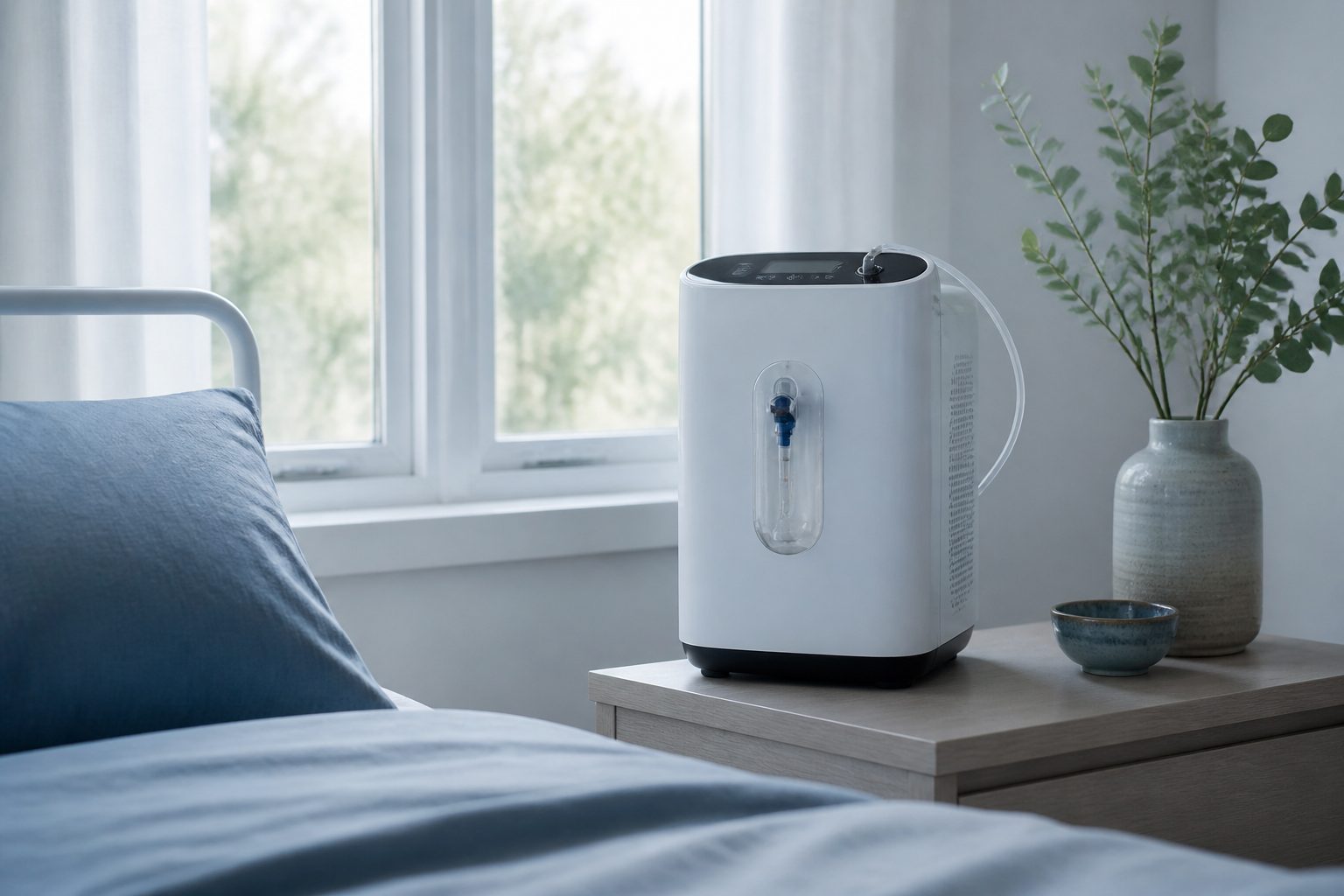
If you or a loved one needs home oxygen therapy, understanding device costs is crucial. Prices for home oxygen devices vary widely between the US, UK, and India, and knowing what’s included can help you plan and budget effectively.
In the US, a new portable oxygen concentrator can cost $1,500-$2,500, while similar devices in India start at $300 (₹25,000). The UK’s National Health Service (NHS) usually provides oxygen devices free to eligible patients, but private purchases cost £500-£1,000 ($650-$1,300).
What home oxygen devices are and who needs them
Home oxygen devices are specialized medical equipment designed to deliver supplemental oxygen to individuals with chronic or acute respiratory conditions. These conditions commonly include chronic obstructive pulmonary disease (COPD), pulmonary fibrosis, severe asthma, cystic fibrosis, and certain heart conditions that impair oxygen absorption. The goal is to maintain adequate blood oxygen levels, reduce symptoms like breathlessness, and improve quality of life.
Main types of home oxygen devices:
- Oxygen concentrators: These are the most widely used devices and come in stationary (home-based) and portable models. Stationary concentrators are larger, require mains electricity, and can deliver continuous oxygen at various flow rates (usually 1–5 liters per minute, but high-flow models exist). Portable concentrators are battery-operated and lighter, suitable for active users or travel, but may have lower maximum flow rates.
- Oxygen cylinders: These are pressurized tanks filled with medical-grade oxygen. They require periodic refilling and are often used as backup for concentrators or for short-term needs. Cylinders can be heavy and require careful handling.
- Liquid oxygen systems: Less common due to higher costs and handling complexity, these store oxygen in liquid form and convert it to gas for inhalation. They offer higher capacity in a smaller form factor and are sometimes preferred for patients needing high-flow oxygen.
In all countries (US, UK, India), a doctor’s prescription is mandatory to obtain home oxygen equipment. The prescription specifies the required flow rate (liters per minute) and delivery mode (continuous or pulse dose), which determines the type of device you need. Devices are not interchangeable: for example, a prescription for high-flow continuous oxygen may rule out most portable concentrators.
Other factors influencing device choice include your mobility (homebound vs active), local electricity reliability (important in India), and whether you need portability for travel or outings. In the US and UK, stationary concentrators are often provided for home use, while portable models are reserved for those with active lifestyles or frequent travel. In India, cost and power supply issues may influence the decision, with many patients relying on cylinders as backup during power outages.
Cost comparison: US, UK, and India
Device prices are shaped by brand, model, features (battery life, portability), and where you buy them. The US market has the highest prices, partly due to insurance complexities, while India’s costs are lowest due to local manufacturing and fewer regulatory barriers. The UK sits in the middle for private purchases, but most residents get oxygen through the NHS at no direct cost.
| Country | Device type | Typical price range | Inclusions | Main brands |
|---|---|---|---|---|
| United States | Portable concentrator | $1,500-$2,500 | Device only; accessories extra | Philips Respironics, Inogen, Invacare |
| United States | Stationary concentrator | $600-$1,200 | Device, basic tubing | Philips, DeVilbiss, AirSep |
| United States | Oxygen cylinder (rental) | $70-$300/month | Rental, refills, delivery | Various |
| United Kingdom | Portable concentrator | £800-£1,200 ($1,000-$1,500) | Device, charger, bag | Philips, SeQual, GCE |
| United Kingdom | Stationary concentrator | £500-£900 ($650-$1,200) | Device, tubing | Devilbiss, Philips |
| United Kingdom | Oxygen via NHS | Free | Device, tubing, servicing | Philips, Air Liquide |
| India | Portable concentrator | $300-$650 (₹25,000-55,000) | Device, charger, basic kit | Oxymed, Philips, Niscomed |
| India | Stationary concentrator | $250-$500 (₹20,000-40,000) | Device, tubing | Oxymed, BPL, Philips |
| India | Oxygen cylinder (rental) | $40-$100/month (₹3,000-8,000) | Rental, refills, delivery | Various |
What is included in the price
Most home oxygen device prices cover the main unit, power supplies, and basic tubing or cannula. Portable concentrators typically include a carrying bag and charger. However, extra batteries, specialized masks, humidifiers, and extended warranties are usually sold separately. In the US and UK, service contracts or maintenance may be extra unless you are receiving oxygen through the NHS or an insurance plan. In India, after-sales service varies by vendor; check warranty terms before buying.
For rented oxygen cylinders, the monthly fee generally includes delivery, pick-up, and a set number of refills. Additional refills or emergency deliveries may cost more. Always confirm what your package covers to avoid surprise charges.
Hidden costs to watch for
When comparing the sticker price of home oxygen devices, it’s vital to account for a range of hidden or ongoing costs that can significantly affect your total outlay. These costs often catch buyers off guard, especially when purchasing online or through private channels. Understanding and planning for these expenses can help you avoid financial surprises and ensure uninterrupted therapy.
- Shipping and delivery charges: For online purchases, especially cross-border orders, shipping fees can be substantial. In the US, expedited shipping for heavy concentrators may add $50–$200. In India, delivery fees vary by city, and rural areas may incur extra charges. UK online retailers may offer free delivery, but this is not universal.
- Replacement parts: Oxygen concentrators require periodic replacement of consumables such as tubing, nasal cannulas, filters, and sometimes batteries. In the US and UK, branded accessories can cost $10–$50 each, and must be replaced every few months. In India, generic parts are cheaper but may not last as long.
- Maintenance and servicing: After the warranty period (typically 1–3 years), servicing costs become the user’s responsibility. Annual maintenance in the US or UK can range from $100–$300. In India, service networks may be limited, and out-of-pocket repair costs can be unpredictable.
- Prescription and doctor’s fees: All three countries require a doctor’s prescription, which may involve consultation fees. In the US, this can add $100–$250 if not covered by insurance. In India, private consultations are usually cheaper but still add to the overall cost.
- Electricity consumption: High-flow or continuous-use devices can increase your monthly electricity bill, especially in countries with high utility rates. In the US and UK, expect a modest rise; in India, the impact can be higher if power rates are steep or supply is unreliable, sometimes necessitating an inverter or backup battery.
- Travel accessories: For portable concentrators, consider costs for additional batteries ($200–$500 each in the US/UK, less in India), travel cases, and airline certification paperwork.
Country-specific factors are important. In the US, insurance may cover a portion of device and supply costs, but deductibles, co-pays, and non-covered extras still apply. In India, most devices are paid for entirely out-of-pocket, and insurance rarely covers equipment or consumables. In the UK, if you receive your device through the NHS, maintenance and replacement parts are generally included; however, private purchases mean the buyer is responsible for all extras. Always ask suppliers for a detailed breakdown of ongoing costs before making a decision.
How to save safely on home oxygen devices
To save money without compromising safety:
- Consider refurbished devices from reputable dealers, especially in the US and UK. Ensure they come with a warranty and have been properly serviced.
- Buy from authorized distributors or major pharmacy chains (e.g., Walgreens, Boots, Apollo Pharmacy) to avoid counterfeit or unsafe products.
- In India, compare prices from online medical device retailers (like Medirent, HealthKart) but check for after-sales support and warranty terms.
- Ask your doctor if you qualify for government schemes or charitable support. In the UK, NHS provision is safest and most cost-effective for eligible patients.
Never buy second-hand devices directly from individuals or unverified sources, as improper maintenance or tampering can pose serious health risks.
Generic vs branded devices: is there a difference?
When shopping for home oxygen devices, buyers will notice that most options are branded, and the differences between brands can have a direct impact on safety, reliability, and long-term costs. Unlike generic medications, which are tightly regulated for equivalence, generic oxygen concentrators are rare in the US and UK due to strict certification requirements. In these countries, only devices with recognized regulatory approvals (such as US FDA clearance or the European CE mark) can be legally sold, ensuring a minimum standard of quality and performance.
- Branded devices: Major international brands like Philips Respironics, Inogen, and DeVilbiss dominate the US and UK markets. These companies invest heavily in research, manufacturing quality, and after-sales service. Their devices typically feature robust construction, reliable oxygen delivery, and comprehensive warranties (1–3 years standard, with optional extensions). After-sales support is strong, with ready availability of parts and authorized service centers. In the US, these brands are often approved by insurance providers and Medicare, making reimbursement easier. In the UK, NHS-supplied equipment is almost always from established brands.
- Local and lesser-known brands: In India, the market includes both international and local manufacturers such as Oxymed and Niscomed. These brands often offer lower up-front prices, making them attractive for cost-conscious buyers. However, they may come with shorter warranties, less durable components, or limited after-sales support. Some models may lack advanced features like low-oxygen alarms or battery backup. Always check for proper safety certifications, such as CE or Indian CDSCO approval, before purchasing any device.
- Generic devices: In Western markets, true generics are almost nonexistent due to regulatory barriers. In India, however, some unbranded or lesser-known models are available at very low prices, sometimes less than half the cost of branded units. These may be suitable for short-term or emergency use, but they often lack durability, have inconsistent oxygen output, and may not be supported by reliable maintenance networks. Safety certifications may be missing or questionable.
Before buying, always verify the device’s certifications (FDA, CE, or local regulatory approval), warranty terms, and the supplier’s reputation for after-sales support. For long-term or critical use, branded devices are usually worth the higher initial investment. For short-term or budget-limited situations in India, local brands may suffice, but weigh the risks carefully and ensure at least basic safety standards are met.
Where to buy: pharmacy chains and online options
Finding a reliable source for home oxygen devices is crucial, as after-sales support and product authenticity can vary widely by country and vendor. In the US, most buyers have access to a variety of purchase and rental options through large pharmacy chains, dedicated medical equipment suppliers, and online retailers. Chains like Walgreens, CVS, and Apria Healthcare offer both in-store and online sales, often working directly with insurance providers to streamline the reimbursement process. Durable Medical Equipment (DME) suppliers are another common avenue, providing rental or purchase plans and handling paperwork for insurance or Medicare coverage. For those paying out-of-pocket, online platforms such as Amazon and Direct Home Medical provide a wide selection, but it’s essential to check the seller’s credentials, warranty coverage, and return policy before committing. Some online retailers also offer refurbished units at lower prices, which can be a budget-friendly option if sourced from reputable dealers.
In the UK, the majority of patients receive home oxygen devices through the National Health Service (NHS), which contracts with approved providers for delivery, setup, and ongoing maintenance at no direct cost to the patient. For private purchases, pharmacy chains like Boots and Lloyds Pharmacy may stock a limited selection, but most buyers turn to specialized medical supply stores or online retailers. Always verify that the device meets UK safety standards and that after-sales service is available, as private purchases are not covered by NHS maintenance contracts.
In India, the market is more fragmented. Large pharmacy chains such as Apollo Pharmacy and MedPlus carry select models, but many buyers rely on online marketplaces like HealthKart, Medirent, and Flipkart to access a broader range of brands and price points. When buying online, it’s critical to ensure the seller is authorized and offers genuine products, as counterfeit or substandard devices are not uncommon. After-sales support is another key consideration—ask about local service centers, spare parts availability, and warranty terms before making a purchase. In major cities, some suppliers offer rental options or doorstep delivery and setup, which can be particularly helpful for elderly or less mobile patients.
How to choose the right device for your needs
Selecting the right home oxygen device is a complex decision that depends on your clinical requirements, lifestyle, and local infrastructure. The process should always begin with a consultation with your respiratory specialist or primary care doctor, who will assess your oxygen saturation and prescribe the necessary flow rate (measured in liters per minute) and delivery method (continuous or pulse dose). This prescription is legally required in the US, UK, and India, and it determines which devices are suitable for your needs.
- Assess your mobility: If you spend most of your time at home, a stationary oxygen concentrator is often the most cost-effective and reliable option. These units are heavier (up to 20 kg/44 lbs) and require access to a stable power supply. If you are active or travel frequently, a portable oxygen concentrator (POC) is preferable, offering mobility and battery-powered operation. Consider the device’s weight (some POCs weigh less than 2 kg/4 lbs), battery life (ideally 4–8 hours per charge), and ease of carrying.
- Noise level: Some concentrators can be noisy, which may disturb sleep or daily activities. Check manufacturer specifications for decibel ratings if this is a concern.
- Power compatibility: Ensure the device is compatible with your country’s voltage (110V in the US, 220–240V in the UK and India) and plug type. For international travelers, look for dual-voltage models or bring appropriate adapters.
- Warranty and service: Ask the supplier about warranty duration (typically 1–3 years), what it covers, and how repairs are handled. In the US and UK, reputable suppliers offer in-home servicing or quick replacements. In India, verify the presence of a local service network, as parts and skilled technicians may be scarce in some regions.
- Spare part availability: Confirm that replacement filters, tubing, and batteries are readily available and reasonably priced in your country.
- Travel certification: If you plan to fly, ensure the device is FAA-approved (for US flights) or meets airline requirements elsewhere. This is especially important for portable units.
In summary, start with a medical assessment, then match device features to your lifestyle and local context. Always check after-sales support and parts availability, especially in India where service networks can be patchy. Don’t hesitate to ask for demonstrations or trial periods before committing to a purchase.
Planning tips for international patients
If you plan to travel or relocate between the US, UK, and India, consider these points:
- Prescriptions may not be transferable—get documentation from your doctor.
- Check airline policies for portable oxygen concentrators and battery limits.
- Voltage differences: US devices use 110V, UK and India use 220-240V. Some models have universal adapters, but others may require a transformer.
- Service and warranty coverage may not extend internationally. Confirm with the manufacturer or distributor before buying.
- Import duties and customs fees may apply if you ship a device across borders.
Planning ahead can save money and avoid last-minute stress, especially if you need oxygen support during travel.
Frequently asked questions
How long do home oxygen concentrators last?
Most home oxygen concentrators last 4 to 7 years with regular maintenance. Longevity depends on usage, brand, and servicing. Always follow manufacturer guidelines for cleaning and filter replacement to maximize lifespan.
Can I buy a home oxygen device without a prescription?
In the US and UK, a prescription is legally required for purchase. In India, some vendors may sell without a prescription, but it is strongly recommended to consult a doctor for safety and correct usage.
What is the difference between a concentrator and an oxygen cylinder?
Concentrators extract oxygen from ambient air and provide a continuous supply as long as they are powered. Cylinders store compressed or liquid oxygen and need regular refilling. Concentrators are more cost-effective for long-term use.
Are portable oxygen concentrators allowed on airplanes?
Most major airlines allow FAA-approved portable oxygen concentrators, but you must notify the airline in advance and bring documentation. Battery limits and device models may vary by carrier.
Does health insurance cover home oxygen devices?
In the US, many insurance plans and Medicare cover part or all of the cost, but out-of-pocket expenses remain. In the UK, NHS patients receive devices free. In India, private insurance rarely covers these devices.
Related guides
Disclaimer: Prices in this guide are indicative and may vary by hospital, retailer, brand, and individual case. Always consult a qualified doctor for medical advice and obtain a written quote from your supplier before purchasing any medical device.