
If you are looking to buy a wheelchair in the Philippines, expect prices to start at around $90 (₱5,000) for a basic manual model, with advanced and motorized wheelchairs ranging up to $2,000 (₱112,000) or more. The final cost depends on the type of wheelchair, the brand, and where you make your purchase—whether from a hospital supplier, pharmacy, or online.
This guide explains what drives wheelchair costs in the Philippines, compares them to other countries, and gives practical tips on finding the right wheelchair for your needs and budget. Whether you are a local resident, expatriate, or an international patient, understanding these details can help you plan your expenses and make an informed choice.
Types of wheelchairs available in the Philippines
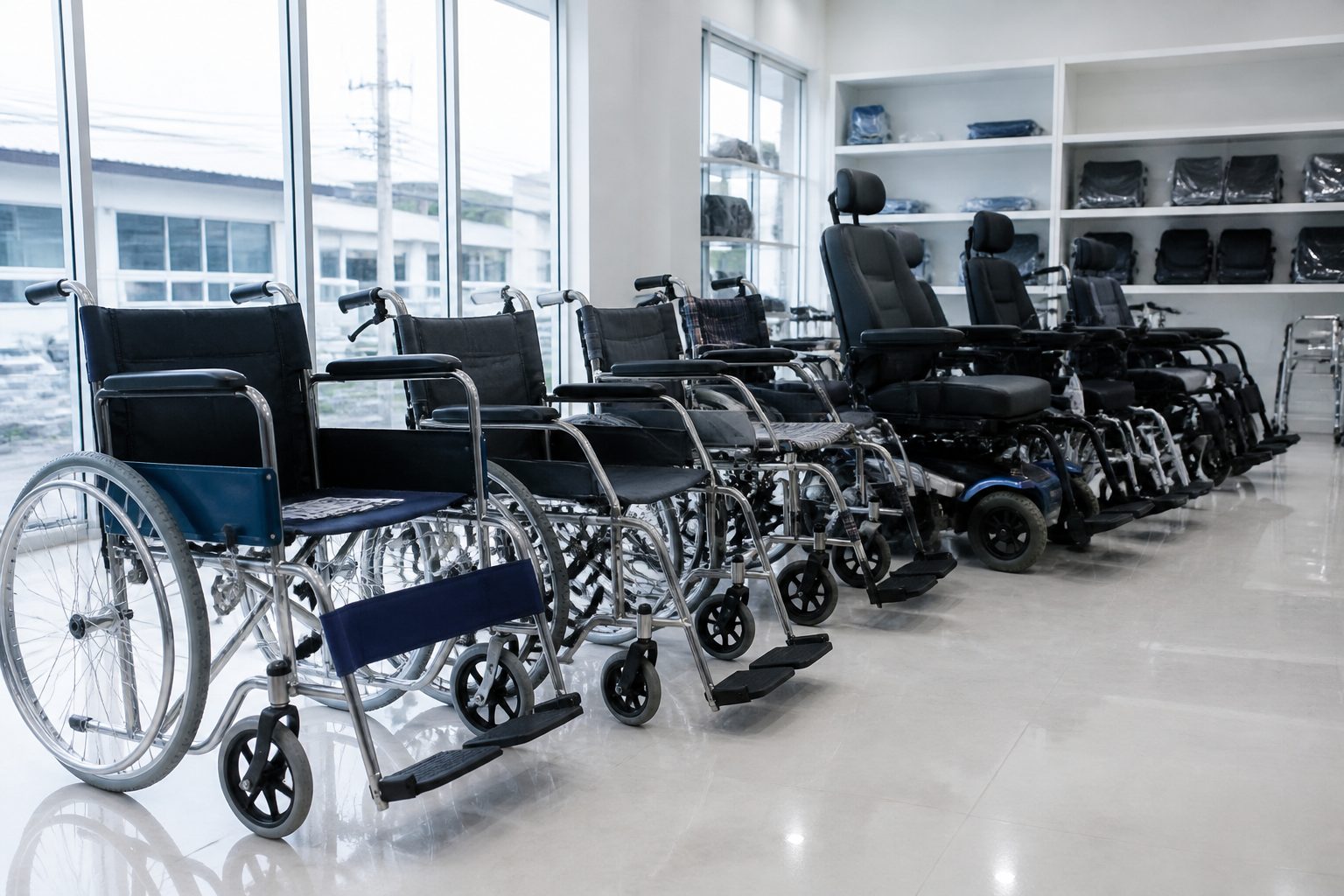
Wheelchairs in the Philippines can be grouped broadly into manual, transport, pediatric, and motorized (electric) models. Manual wheelchairs are the most common and affordable, suitable for people with temporary or moderate mobility issues. Transport wheelchairs are lightweight and intended mainly for short transfers, such as hospital discharges or travel. Pediatric wheelchairs are designed for children and often customized for growth and support. Motorized wheelchairs offer independence to users who lack the strength to propel a manual chair, but come with a much higher price tag.
Most wheelchairs sold locally are imported, though some basic manual models are assembled in the Philippines. Reputable brands include Drive Medical, Karma, and Days Healthcare. Always check if the wheelchair meets Philippine FDA or international safety standards before purchasing. Availability varies by region; major cities like Manila, Cebu, and Davao offer the widest selection, while provincial areas may have limited options.
Wheelchair prices in the Philippines: A detailed breakdown
Manual wheelchairs start at around $90-$180 (₱5,000-₱10,000) for basic steel-framed models. Lightweight or folding models can cost $180-$350 (₱10,000-₱20,000), depending on materials and features. Reclining or specialized models for long-term use range from $350-$800 (₱20,000-₱45,000). Pediatric wheelchairs, often custom-fitted, usually fall between $200-$900 (₱11,000-₱50,000).
Motorized wheelchairs are significantly more expensive, starting at $850 (₱48,000) and going up to $2,000 (₱112,000) or higher for advanced models with recline, standing, or off-road capabilities. Accessories such as cushions, headrests, or elevating leg rests add to the cost, typically between $20-$120 (₱1,100-₱6,500) each.
Local government units (LGUs) and charities sometimes subsidize basic manual wheelchairs for qualified individuals, but selection is limited and wait times can be long. Private purchase offers faster access and greater choice, but buyers should compare prices and check warranties carefully.
Comparing wheelchair costs: Philippines and other countries
| Country | Manual wheelchair | Motorized wheelchair | Notes |
|---|---|---|---|
| Philippines | $90-$350 (₱5,000-₱20,000) | $850-$2,000 (₱48,000-₱112,000) | Most models imported; some LGU subsidies |
| India | $60-$250 (₹5,000-₹21,000) | $800-$2,200 (₹66,000-₹180,000) | Locally made options widely available |
| United States | $200-$700 | $2,000-$8,000 | Insurance may cover part of cost |
| United Kingdom | $180-$800 (£140-£620) | $2,500-$7,000 (£2,000-£5,600) | NHS may provide basic models for free |
| Indonesia | $100-$300 (Rp 1.6-4.9 million) | $900-$2,500 (Rp 14-39 million) | Imported and local brands available |
| Bangladesh | $70-$220 (৳7,500-৳24,000) | $800-$2,000 (৳85,000-৳210,000) | NGOs supply low-cost options |
| Pakistan | $80-$240 (Rs 22,000-67,000) | $850-$2,100 (Rs 235,000-580,000) | Local production common |
| Singapore | $150-$500 (S$200-S$670) | $1,200-$4,000 (S$1,600-S$5,400) | Subsidies for citizens, expats pay full price |
Where to buy wheelchairs in the Philippines
Wheelchairs are available from a range of sources in the Philippines, each with its own advantages and considerations. In major cities like Metro Manila, Cebu, and Davao, hospital-based medical supply stores and independent medical equipment dealers are common options. These stores often carry a variety of models, from basic manual wheelchairs to more advanced or motorized options. Large pharmacy chains such as Mercury Drug and South Star Drug also stock basic wheelchairs, making them accessible to a wide audience, though their selection may be limited compared to specialized dealers.
For those seeking convenience or a broader range of choices, online marketplaces like Lazada and Shopee have become popular. These platforms offer new and sometimes refurbished wheelchairs, often at lower prices than physical stores. However, buyers should be vigilant about the risks associated with online purchases, such as counterfeit or substandard products. It’s important to check seller ratings, reviews, and return policies, and to verify that the product comes with a legitimate warranty and after-sales support.
Dedicated mobility stores in urban centers provide the most comprehensive selection, including opportunities to physically test different models for comfort and fit. Some of these stores offer basic wheelchair fitting, adjustment, or customization services, which can be invaluable for users with specific needs or physical conditions. Staff in these stores are often knowledgeable and can help guide buyers through the selection process, ensuring a better match between the user’s requirements and the wheelchair’s features.
For residents in rural or remote areas, access to physical stores may be limited, making online shopping the most practical option. However, shipping fees can be substantial, ranging from $10 to $40 (₱560-₱2,200) depending on the size and weight of the wheelchair and the distance to the delivery location. Delivery times may also be longer, and after-sales service such as repairs or part replacements can be more challenging to arrange. It’s advisable for rural buyers to coordinate with local health centers or social welfare offices, as some may have information on local suppliers or programs that assist with mobility device procurement.
What is included in the price, and hidden costs
When you purchase a wheelchair in the Philippines, the price you see advertised usually covers the basic frame, a standard seat cushion, and footrests. However, the initial price often excludes many features and services that users may need or want. For example, accessories such as anti-tip devices (which help prevent the wheelchair from tipping backward), specialized wheels for rough terrain, or premium seat cushions designed to reduce the risk of pressure sores are typically considered add-ons. These can increase the total cost by $20 to $200 (₱1,100-₱11,000), depending on the brand and type of accessory.
Delivery and assembly policies vary by seller. In Metro Manila and some other major urban centers, delivery and basic assembly may be included for free, especially for higher-priced models or during promotional periods. Outside the capital, buyers should expect to pay additional shipping fees, which can be significant due to the size and weight of wheelchairs. For rural or remote areas, delivery costs and waiting times can be even higher.
Ongoing maintenance is another important cost to consider. Manual wheelchairs require periodic checks for wear and tear, such as tire replacement or tightening of bolts. For motorized wheelchairs, maintenance is more involved and includes regular servicing, battery replacement (which can cost $100-$250 or ₱5,600-₱14,000), and the occasional need for specialized repairs. Spare parts, especially for imported or branded models, may not always be readily available locally, leading to longer wait times and higher costs for repairs.
Warranty coverage is another potential hidden cost. Some wheelchairs come with limited warranties that only cover manufacturing defects for a short period. For imported or high-end models, warranty service may require shipping the wheelchair or its parts abroad, incurring additional expenses and delays. Always ask for the full terms of the warranty and after-sales support before purchasing, as these factors can significantly impact the total cost of ownership over the lifespan of the wheelchair.
How to save safely on wheelchair costs
There are several practical ways to reduce wheelchair costs in the Philippines without compromising on safety or quality. First, consider whether a basic manual wheelchair will meet the user’s needs, as these are generally much more affordable than motorized options. If the wheelchair will be used only temporarily or for short distances, a standard model may suffice. However, always ensure that the model you choose is appropriate for the user’s physical condition and daily activities.
Another option is to look for refurbished or second-hand wheelchairs, which are sometimes available through hospitals, rehabilitation centers, or non-governmental organizations (NGOs). These can be significantly cheaper than new units, but it is crucial to thoroughly inspect the wheelchair for structural integrity, wear, and safety before purchase. Ask about the history of the chair and whether any parts have been replaced or repaired.
Group purchases organized by patient support groups or disability organizations can sometimes secure bulk discounts from suppliers. If you are part of such a group, inquire about collective buying opportunities or special arrangements with local dealers. For motorized wheelchairs, check if the manufacturer or distributor has a service center in the Philippines. This ensures easier access to repairs and maintenance, which can otherwise be costly if parts need to be imported or sent abroad.
Be cautious when browsing online marketplaces for deals. While some online sellers offer genuine discounts, others may list products that do not meet local safety or durability standards. Always buy from reputable dealers, request a demonstration or product inspection if possible, and ask for written warranty terms. Avoid offers that seem too good to be true, as these may indicate counterfeit or substandard products.
Finally, explore local government or charity programs that provide assistance for mobility devices. Some barangays, city halls, or social welfare offices offer financial aid, subsidies, or even free wheelchairs to qualified residents, particularly persons with disabilities (PWDs). Check with your local government unit or PWD affairs office for eligibility criteria and application procedures. Taking advantage of these programs can significantly reduce out-of-pocket expenses while ensuring access to safe and reliable mobility aids.
Tips for choosing the right wheelchair
Selecting the right wheelchair in the Philippines involves a careful assessment of several key factors to ensure comfort, safety, and long-term usability. Begin by evaluating the user’s physical needs: consider the individual’s upper body strength, balance, and ability to self-propel. Manual wheelchairs are generally suitable for users who have sufficient arm strength and require mobility support for shorter periods or distances. In contrast, motorized (power) wheelchairs are better for those with limited mobility, muscle weakness, or chronic conditions that prevent manual propulsion.
Next, examine the user’s daily lifestyle and environment. For those who frequently travel outside the home or use public transportation, a lightweight, foldable wheelchair may be ideal for easy transport and storage. Consider the width of doors, hallways, and elevators in the user’s home, as well as the type of terrain they will encounter—some wheelchairs are better suited for rough or uneven surfaces than others.
Key specifications to review include seat width and depth, weight capacity, the type of wheels and tires (solid vs. pneumatic), the folding mechanism, and the adjustability of footrests and armrests. For users with specific medical needs, such as a high risk of pressure sores, investing in specialized seat cushions or customizable seating systems can make a significant difference in comfort and health outcomes.
Whenever possible, consult a rehabilitation doctor or physical therapist for a professional assessment. These experts can recommend appropriate models based on the user’s condition and may provide guidance on fitting and adjustments. Testing several models in-store is recommended to compare comfort, ease of maneuverability, and accessibility features.
Finally, inquire about the availability of spare parts, warranty coverage, and after-sales support, as these factors can affect the long-term cost and usability of the wheelchair. For long-term users, it may be worthwhile to invest in a higher-quality or custom-fitted wheelchair, as this can improve quality of life and help prevent secondary medical issues such as pressure ulcers, joint pain, or posture problems.
Comparison with other medical devices: Glucometers, CPAP, and more
When considering the cost of a wheelchair in the Philippines, it’s helpful to compare it with the prices of other essential medical devices commonly used by individuals with chronic health conditions. For example, a basic glucometer—an important tool for people with diabetes to monitor blood sugar—typically costs between $20 and $40 (₱1,100-₱2,200). This price generally includes the device itself, but ongoing costs such as test strips and lancets can add up significantly over time, often exceeding the initial purchase price within a few months for regular users.
For people diagnosed with sleep apnea, a CPAP (Continuous Positive Airway Pressure) machine is a critical investment. In the Philippines, CPAP devices are priced from $400 to $1,200 (₱22,000-₱67,000), depending on the brand, features (such as humidification and data tracking), and whether the device is imported or locally distributed. Replacement masks, hoses, and filters are recurring expenses that users must budget for, as these parts require regular replacement to maintain hygiene and device effectiveness.
Another essential device is the home oxygen concentrator, which starts at around $450 (₱25,000). This device is often required for individuals with chronic respiratory conditions. Ongoing electricity costs and occasional maintenance or filter replacement should be considered, as these can impact the long-term affordability of home oxygen therapy.
Hearing aids are also a significant investment, with prices ranging from $200 to $1,000 (₱11,000-₱56,000) per ear, depending on the type (analog vs. digital), brand, and level of customization required. Batteries, earmold replacements, and servicing are additional costs that can accumulate over the years.
Most of these medical devices, including wheelchairs, are not covered by the national health insurance program (PhilHealth), which means patients and their families typically pay out-of-pocket. While some private health insurance plans or government social welfare programs may provide partial reimbursement for certain conditions or devices, such coverage is limited and often requires extensive documentation or pre-approval. As a result, families often have to plan carefully, compare prices, and seek out discounts or charitable assistance to afford these essential tools for daily living.
Frequently asked questions
How long does a wheelchair last in the Philippines?
With regular use and proper maintenance, a manual wheelchair typically lasts 3-5 years. Motorized wheelchairs may require battery replacement after 1-2 years. The lifespan depends on usage, build quality, and local conditions. Always check warranty terms before buying.
Are wheelchairs covered by PhilHealth or insurance?
PhilHealth does not routinely cover the cost of wheelchairs. Some private insurance policies include limited coverage for durable medical equipment, but most purchases are paid out-of-pocket. Check your policy or ask your insurer for details.
Can I rent a wheelchair instead of buying?
Yes, some hospitals and medical supply stores in major cities offer wheelchair rental, typically $10-$25 (₱560-₱1,400) per week. Rental is suitable for short-term needs, but buying may be more cost-effective for long-term use.
What is the best place to buy a wheelchair in the Philippines?
For selection and after-sales support, large mobility stores or hospital-based suppliers in Metro Manila and Cebu are recommended. Online marketplaces offer convenience but require caution regarding product quality and warranty.
Are there programs to help low-income people get wheelchairs?
Some local government units, charities, and NGOs provide basic manual wheelchairs to qualified applicants. Application processes vary and waiting lists can be long. Contact your local social welfare office for guidance.
Related guides
Disclaimer: Prices in this guide are indicative and may vary by location, supplier, and individual needs. Always request a written quote and consult a healthcare professional for personalized advice before purchasing a wheelchair or other medical device.