
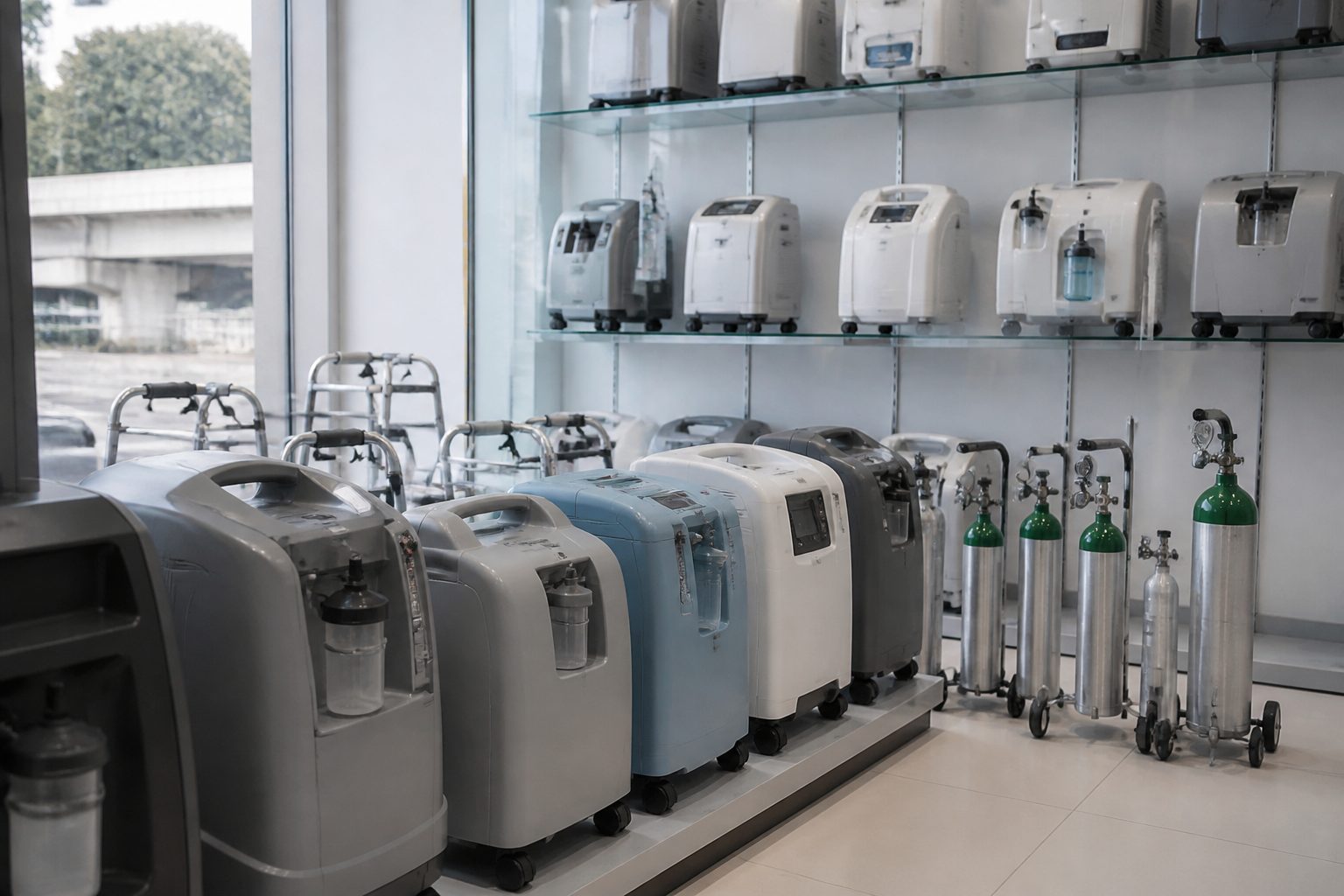
Home oxygen devices in Malaysia typically range from $350 to $1,500, depending on the type (concentrator or cylinder), brand, and features. This guide is for patients and families needing oxygen therapy at home, explaining what’s available, what drives the price, and what to watch out for when buying in Malaysia.
Whether you’re managing COPD, recovering from pneumonia, or supporting an elderly relative, understanding the costs and options for home oxygen can help you budget and make a safe, informed choice. Below, we compare Malaysian prices with other countries, clarify what’s included, and provide tips for buying from pharmacies or suppliers.
Types of home oxygen devices available in Malaysia
In Malaysia, the most common home oxygen devices are oxygen concentrators and oxygen cylinders. Oxygen concentrators are electric devices that filter and concentrate oxygen from ambient air. They are widely used for long-term therapy and don’t require refilling. Portable models are also available for mobility. Oxygen cylinders, on the other hand, store compressed oxygen and need periodic refills or replacements. They are often used for short-term needs or as a backup for concentrators.
Most urban pharmacies and medical supply stores in Malaysia will have both types, but concentrators are more popular for chronic conditions due to their convenience. Some suppliers also offer oxygen cans or small tanks for travel, but these are less common for home care. When choosing, consider your prescription, power supply stability, and whether you need portability.
Costs of home oxygen devices: Malaysia vs other countries
The cost of home oxygen devices in Malaysia is generally lower than in Western countries but can be higher than in some neighbouring Southeast Asian markets due to import duties and brand preferences. The price depends on the device type, capacity, and whether it’s a local or imported brand. Below is a comparison of typical price ranges in major countries for new devices (rental options are discussed later in this guide):
| Country | Oxygen concentrator | Oxygen cylinder (starter kit) | Portable concentrator |
|---|---|---|---|
| Malaysia | $500-$1,200 (RM2,400-5,400) | $350-$700 (RM1,700-3,200) | $900-$1,500 (RM4,000-6,800) |
| Singapore | $700-$1,500 (SGD950-2,000) | $450-$800 (SGD600-1,100) | $1,200-$2,200 (SGD1,600-3,000) |
| Thailand | $450-$1,000 (THB16,000-35,000) | $300-$650 (THB10,000-23,000) | $900-$1,400 (THB32,000-50,000) |
| India | $350-$900 (₹29,000-75,000) | $150-$300 (₹12,000-24,000) | $750-$1,200 (₹62,000-100,000) |
| Indonesia | $400-$1,000 (IDR6-15 million) | $200-$500 (IDR3-7.5 million) | $850-$1,300 (IDR13-20 million) |
| Philippines | $500-$1,200 (PHP28,000-68,000) | $250-$600 (PHP14,000-34,000) | $950-$1,600 (PHP54,000-92,000) |
| United States | $800-$2,000 | $600-$1,000 | $1,500-$3,000 |
| United Kingdom | $700-$1,800 (£550-1,400) | $500-$900 (£390-700) | $1,200-$2,600 (£950-2,000) |
| Australia | $850-$2,000 (AUD1,300-3,000) | $650-$1,200 (AUD1,000-1,800) | $1,500-$2,800 (AUD2,200-4,200) |
Prices in Malaysia are competitive, especially for standard stationary concentrators. Portable models and imported brands cost more. Cylinder starter kits include the tank, regulator, and mask but refills are extra. Always check what each package includes.
What is included in the price (and what’s not)
When buying a home oxygen device in Malaysia, the quoted price for a concentrator usually includes the machine, standard tubing, nasal cannula, and a basic warranty (6-12 months is typical). Some sellers provide delivery and setup within urban areas at no extra charge. For oxygen cylinders, the starter kit price covers the cylinder, regulator, mask or cannula, and sometimes a trolley. However, refills are not included and may cost $10-$25 (RM45-110) per refill, depending on cylinder size.
Service and maintenance are generally not included in the sticker price. Extended warranties, replacement parts, backup batteries (for portable units), and accessories like humidifiers or extra tubing are usually sold separately. Always ask the supplier to itemise what comes with your purchase and what costs extra, especially if you’re comparing quotes.
Where to buy: pharmacy chains, medical supply stores, and online
Most major pharmacy chains in Malaysia, such as Guardian, Caring, and Watsons, can order home oxygen devices, but the range is often limited. For a wider selection, especially for specific brands or portable models, dedicated medical supply stores and online suppliers are preferable. Kuala Lumpur, Penang, and Johor Bahru have multiple specialist shops catering to home care needs.
Online platforms like Lazada and Shopee list both local and imported devices. While prices may be lower online, check the seller’s reputation and confirm after-sales service. Some online purchases may not include warranty service in Malaysia or may require self-assembly. For complex needs, or if you require training, in-person suppliers are safer. Always ensure the device meets Malaysian Medical Device Authority (MDA) registration requirements.
Rental versus purchase: what’s best for you?
Deciding whether to rent or purchase a home oxygen device in Malaysia depends on your medical needs, expected duration of use, and financial situation. Renting is often the best choice for short-term therapy—such as post-surgery recovery, acute respiratory illness, or palliative care—where oxygen is only needed for several weeks or a few months. Rental rates for oxygen concentrators typically start from RM250-450 (about $60-$100) per month, and most suppliers require a refundable security deposit. These rental packages often include delivery, initial setup, and basic maintenance, making them convenient for temporary needs. Oxygen cylinders can also be rented, with refill costs billed separately; this is useful if you anticipate only occasional or backup use.
Purchasing a device makes more financial sense for chronic or long-term oxygen therapy, such as for COPD or other persistent respiratory conditions. Although the upfront cost is higher—often ranging from RM2,000 to RM7,000 for new concentrators—owning the device typically becomes more economical than renting after 12 to 18 months of continuous use. Ownership also gives you more flexibility in choosing specific models, features, and accessories, especially if you need a portable or travel-friendly unit. However, buyers should be aware that after the warranty period (usually 1-2 years), they are responsible for all repairs and maintenance. When making your decision, consider your expected duration of use, mobility requirements, and budget. If you’re unsure, some suppliers offer rent-to-own or trial rental programs, allowing you to upgrade to purchase if long-term therapy becomes necessary.
How to save on home oxygen devices safely
There are several strategies to reduce the cost of home oxygen therapy in Malaysia without compromising on safety or quality. Start by considering local brands or models that are certified by the Malaysian Medical Device Authority (MDA); these often provide similar performance to imported devices at a lower price due to reduced shipping and import costs. Ask reputable suppliers if they offer refurbished, demo, or open-box units—these devices are typically 20–40% less expensive than new ones and are thoroughly checked and serviced for safety and reliability. Always compare at least three quotes from different suppliers, and make sure you understand exactly what is included in each offer, such as accessories, delivery, setup, and after-sales support.
For oxygen cylinders, pay close attention to refill charges and delivery fees, as these can accumulate significantly over time, especially if you require frequent refills or live in a remote area. Avoid purchasing second-hand devices from unverified sources, such as online classifieds or social media, since these units may not be properly calibrated, cleaned, or safe for medical use. Instead, look for suppliers who offer certified pre-owned devices with warranties. If affordability is a concern, inquire with your doctor, local hospital, or social worker about assistance programs—some charities, patient advocacy groups, and government agencies offer subsidies, interest-free loans, or device lending schemes for eligible patients. Lastly, if you have private health insurance, review your policy or consult your insurer to check whether home oxygen therapy is covered for your specific diagnosis, as some plans may reimburse part or all of the cost. By following these steps, you can secure reliable oxygen therapy at the best possible value.
What to look for: quality, safety, and support
Quality and safety should be your top priorities when selecting a home oxygen device in Malaysia. Always choose devices that are approved by the Malaysian Medical Device Authority (MDA), as this ensures the product meets local safety and performance standards. For imported brands, look for internationally recognized certifications such as CE (Conformité Européenne) or FDA (U.S. Food and Drug Administration), which indicate compliance with rigorous testing and manufacturing standards. For oxygen concentrators, key quality indicators include the device’s oxygen flow rate (typically 1–5 liters per minute for home models), oxygen purity levels, noise level (important for night use), power consumption, and the length and terms of the warranty. If you require oxygen therapy around the clock, ask about backup power solutions, such as battery packs or compatibility with generators, to safeguard against power outages.
Reliable after-sales support is essential for peace of mind and uninterrupted therapy. Choose suppliers with a local service center or an established network of authorized service partners, and clarify their response times for repairs or technical issues. Ask whether spare parts are readily available in Malaysia, and whether the supplier can provide a loaner device if yours needs servicing. For portable concentrators, check the weight and battery life—important considerations if you plan to travel or need mobility. Leading suppliers often include patient and caregiver training as part of their service; take advantage of this to ensure correct usage, maintenance, and troubleshooting. By focusing on these factors, you can ensure both safety and long-term satisfaction with your home oxygen device.
Hidden costs and pitfalls to avoid
While the sticker price of a home oxygen device is the most visible expense, several ongoing and sometimes unexpected costs can impact your budget over time. Consumables such as nasal cannulas, oxygen masks, tubing, and air filters need regular replacement—typically every few weeks or months—to maintain hygiene and device performance. For oxygen cylinders, factor in the recurring cost of refills, which can vary depending on your location and the frequency of use. Oxygen concentrators, while eliminating refill expenses, do consume electricity; although the power usage is generally modest (often similar to a small refrigerator), continuous operation can add RM30-70 or more to your monthly electricity bill, depending on local rates and usage patterns.
In rural or remote areas of Malaysia, delivery charges for both devices and refills can be significantly higher, and urgent servicing may come with additional fees due to travel distance. Some suppliers offer seemingly attractive prices online, but these may be grey-market imports lacking local warranty, technical support, or compliance with Malaysian safety standards. Always verify that the supplier provides local servicing and that the device is registered with the MDA. Training, installation, or demonstration sessions may also incur extra charges, so confirm what is included before committing. For elderly or immobile patients, consider accessibility features like device weight, handles, or trolleys, and ask about trial periods to ensure suitability. Always request a comprehensive written quote that details all costs, including consumables, delivery, and potential future servicing. Clarify return and exchange policies to avoid surprises if the device does not meet your needs.
The bottom line
When it comes to home oxygen devices in Malaysia, patients and caregivers benefit from a relatively accessible and affordable market compared to many other countries. The Malaysian healthcare system, with its mix of public and private providers, ensures that both imported and locally manufactured oxygen devices are available to suit a range of medical needs and budgets. Oxygen concentrators, which draw oxygen from ambient air, are the most popular choice for those needing continuous or long-term therapy; these devices are favored for their lower running costs and convenience, as they eliminate the need for frequent refills. On the other hand, oxygen cylinders remain common for short-term therapy, emergency backup, or situations where portability is needed, though they require regular refilling and careful handling.
When choosing a device, it’s important to compare not just the upfront price but also what’s included in the package—such as accessories, spare filters, and after-sales support. Some suppliers offer comprehensive packages with training, installation, and maintenance, while others may charge extra for these services. The reputation of the supplier and the availability of local servicing are crucial factors, as ongoing support can affect both safety and long-term costs. Always consult your doctor before making a purchase; your physician can recommend the appropriate device type and specifications based on your medical condition. In Malaysia, ensure that any device you consider is registered with the Medical Device Authority (MDA), which certifies that it meets local safety and quality standards. Taking these steps will help you make an informed, safe, and cost-effective decision for your home oxygen needs.
Frequently asked questions
How do I know if I need a home oxygen device?
Your doctor will prescribe home oxygen therapy if your blood oxygen levels are consistently low due to conditions like COPD, heart failure, or certain infections. Never self-prescribe or buy a device without a medical assessment.
Can I travel with my home oxygen device?
Portable oxygen concentrators are designed for travel and can be used on domestic flights within Malaysia, but check airline policies first. Always bring a doctor’s letter and ensure you have spare batteries or a backup supply.
Are oxygen devices covered by insurance in Malaysia?
Some private insurance plans cover home oxygen devices if prescribed for a covered condition. Public healthcare generally does not subsidise home oxygen equipment for outpatients. Check your policy details and ask your insurer for documentation requirements.
How often do oxygen cylinders need refilling?
This depends on the cylinder size and prescribed flow rate. A standard 6.8L cylinder may last 6–8 hours at 2L/min. Plan for regular refills and ensure your supplier can deliver promptly, especially if you live in a rural area.
What maintenance does a home oxygen concentrator require?
Concentrators require periodic filter cleaning or replacement, checking tubing for leaks, and annual servicing by a qualified technician. Follow the manufacturer’s instructions and schedule regular maintenance to ensure safe operation.
Related guides
Disclaimer: Prices and product details are indicative and vary by supplier, region, and patient needs. Always consult a qualified doctor before starting oxygen therapy and request a written quote from your chosen supplier.